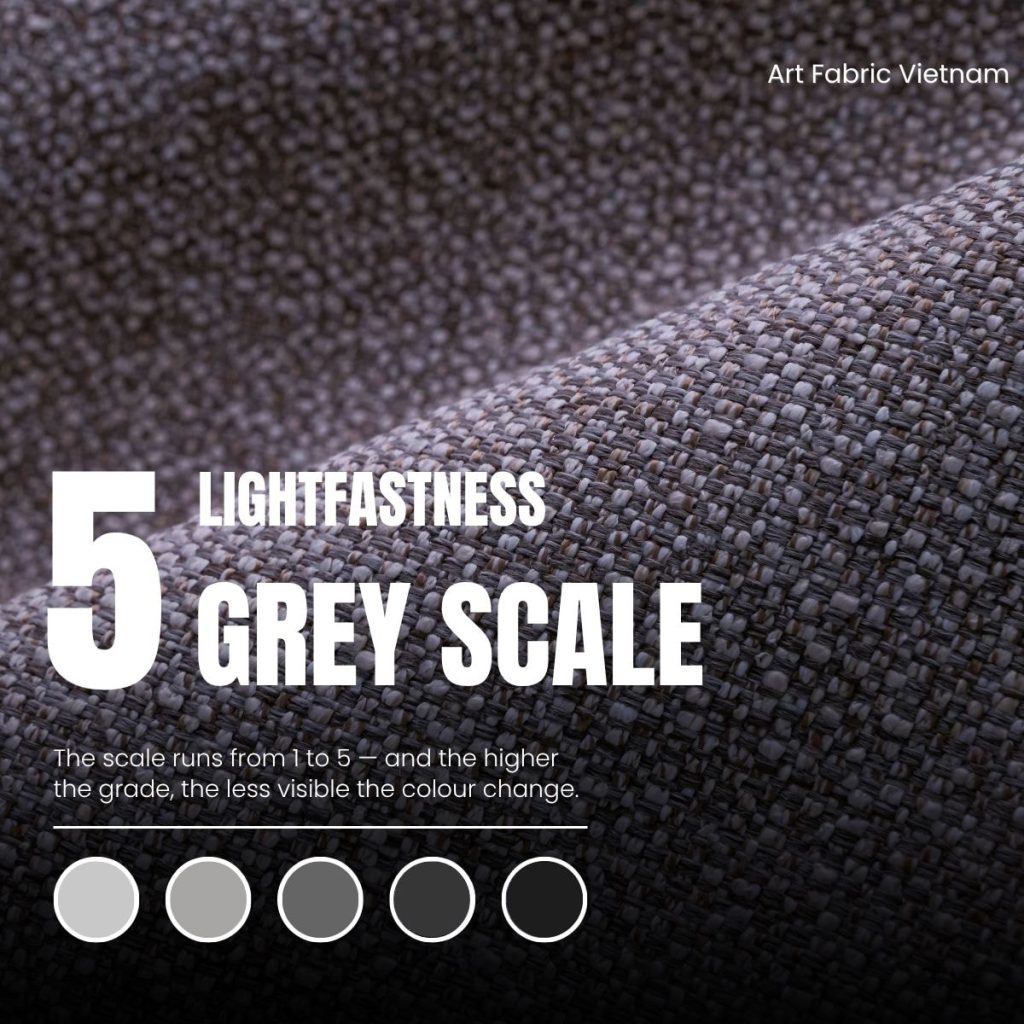
The global outdoor furniture market has transformed dramatically over the past decade. What was once a niche segment of the home décor industry has grown into a multi-billion-dollar market, driven by rising demand for stylish, durable, and low-maintenance outdoor living.
At the center of this evolution is one material that has consistently demonstrated strong performance and commercial efficiency: polyester.
For manufacturers, designers, hospitality projects, and homeowners, outdoor polyester fabric has become one of the most widely used textile solutions for exterior applications. But why does polyester continue to stand out as new high-performance materials enter the market?
The answer lies in its unique combination of durability, manufacturing scalability, design versatility, and cost efficiency.
At Art Fabric Vietnam, we have seen how advances in polyester technology continue to expand the possibilities of modern outdoor living. In this guide, we explore what makes polyester such a compelling choice for outdoor fabrics.

What Makes Polyester So Effective for Outdoor Applications?
The Chemical DNA of Durability
To understand why polyester performs so well in outdoor fabrics, it helps to look at its molecular structure. Polyester is a family of polymers containing ester functional groups within the main chain. In textile applications, the most common form is polyethylene terephthalate (PET).
This molecular structure contributes to several properties that make polyester well suited to outdoor upholstery and other demanding applications.
Hydrophobic Properties
Unlike natural fibers such as cotton and linen, which are hydrophilic and readily attract moisture, polyester is naturally hydrophobic, meaning it has relatively low water absorption.
In outdoor environments, this provides an important advantage:
- Reduced Sagging: Fabrics that absorb significant amounts of water can become heavier and lose their shape. Polyester’s lower moisture absorption helps the fabric maintain its structure and tension.
- Moisture Resistance: Lower water absorption can help reduce the conditions that encourage mold and mildew growth, depending on the fabric construction and surrounding environment.
Dimensional Stability
Polyester fibers are highly resistant to stretching and shrinkage, helping them maintain their shape through repeated use.
For outdoor cushions and upholstery, this dimensional stability helps preserve a clean, tailored appearance—even after extended periods of everyday use.
The Economics of the Leading Fiber
In commercial design and large-scale manufacturing, the “best” material is not simply the one that performs well. It is the one that delivers reliable performance while making economic sense over its entire lifecycle.
This is where outdoor polyester fabric offers a compelling advantage, combining scalable production with long-term value.
Scalability in Production
Polyester is a synthetic fiber produced through highly optimized manufacturing processes. Unlike agricultural fibers such as cotton and silk, its production is less dependent on crop cycles, weather conditions, or specific growing regions.
This production stability offers two important benefits:
- Greater Cost Predictability: More consistent manufacturing conditions make it easier for manufacturers to plan material costs and production requirements.
- High-Volume Capability: Polyester production can support large-scale projects, from hospitality developments and furniture programs to multi-room resort installations, where material consistency and supply capacity are critical.
For commercial projects, scalability is not simply about producing more fabric. It is about maintaining consistency, availability, and cost control across the entire project.
Longevity vs. Replacement Cost
For the end-user, the economy of polyester is found in its lifespan. A cheap, non-performance fabric might cost 30% less upfront, but if it fades and tears in two years, the cost of replacement and labor makes it three times more expensive in the long run. High-quality Outdoor Fabrics made of polyester provide a decade of service, making the “per-year” cost exceptionally low.
Innovation
There is a common misconception that polyester feels stiff or “plastic-like.” This may have been true in the 1970s, but modern textile engineering has changed the game.
Texturizing and Microfibers
Today, manufacturers can “texturize” polyester yarn to mimic the feel of wool, linen, or silk. Through various air-jet and false-twist texturing processes, the fibers gain bulk and softness, providing a luxurious “hand-feel” that is indistinguishable from natural fibers to the average touch.
Solution Dyeing
Historically, fabrics were “piece-dyed,” where color was added to the surface of the woven cloth. Today, premium Outdoor Fabrics often utilize Solution Dyeing. In this process, the color pigment is added to the polymer melt before the fiber is even extruded.
- Result: The color is locked into the entire fiber, not just the surface.
- Benefit: Incredible resistance to UV bleaching and harsh cleaning chemicals (even bleach).
To see how these advancements translate into real-world performance, you may want to check our comprehensive guide on the technical advantages of Olefin vs. Polyester and our latest global certifications for waterproofing and PFAS-free finishes.
Comparing Polyester with Other Synthetics
While polyester is a leader, it often shares the stage with Olefin and Acrylic. Here is how they stack up in a professional comparison:
| Feature | High-Grade Polyester | Acrylic | Olefin |
| Tensile Strength | Very High | Medium | High |
| Abrasion Resistance | Excellent | Good | Excellent |
| Softness/Texture | High (Versatile) | Very High | Medium |
| Cost | Most Efficient | Premium | Efficient |
| Heat Resistance | High | Medium | Low |
Polyester’s high melting point makes it superior for applications where high-heat exposure (such as near fire pits or in tropical climates) is a concern, as Olefin can sometimes suffer from “heat-setting” or melting at lower temperatures.
The Environmental Shift: Recycled Polyester (rPET)
Innovation isn’t just about performance; it’s about sustainability. One of the biggest reasons polyester remains at the top is its ability to be recycled.
Recycled Polyester (rPET) is created by melting down existing plastic (like water bottles) and re-spinning it into new fibers. This process:
- Reduces energy consumption by nearly 50% compared to virgin polyester.
- Diverts plastic from oceans and landfills.
- Maintains the same high-performance standards as virgin fibers.
At Art Fabric Vietnam, we are increasingly seeing demand for these eco-friendly options in Modern Living Spaces, where “luxury” is now defined by environmental responsibility.
Applications in the Modern World
The versatility of polyester makes it a practical choice across a wide range of outdoor fabric applications—from demanding marine environments to everyday residential spaces.
Marine-Grade Upholstery
Designed for environments exposed to salt air and constant moisture, polyester fabrics can be used for upholstery applications on yachts, cruise ships, and other marine settings.
Hospitality
Hotels, restaurants, beach clubs, and resorts require upholstery that can withstand frequent use while remaining easy to maintain. High-performance polyester fabrics provide a practical solution for high-traffic seating and demanding hospitality environments.
Residential Patios
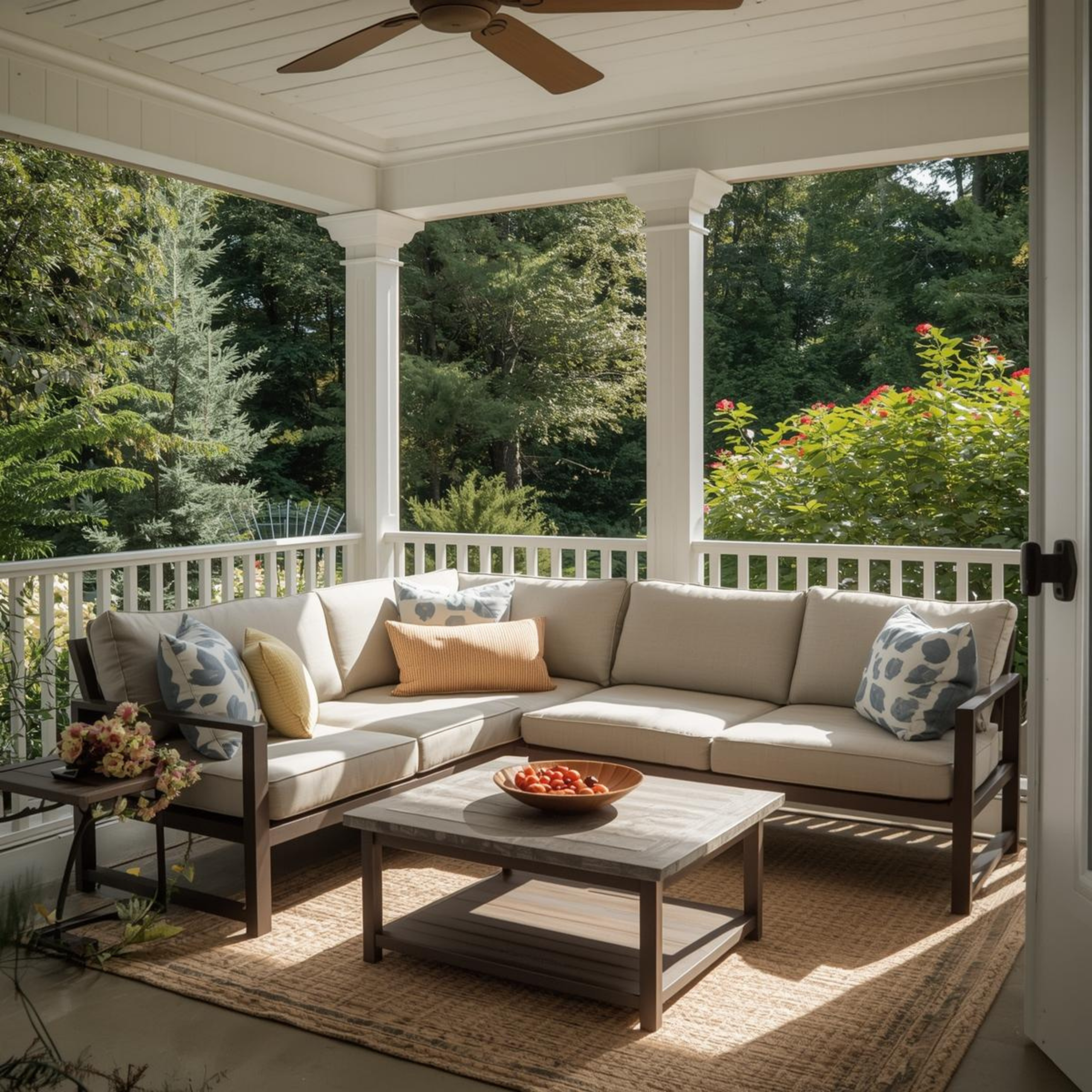
Bring the comfort and visual appeal of an indoor living room outdoors. Polyester upholstery can be used for patio sofas, lounge chairs, and outdoor cushions, helping create comfortable spaces designed for everyday living.
Shade Structures
High-tenacity polyester is also used in umbrellas and awnings where dimensional stability is important. Its resistance to stretching helps shade structures maintain their form when exposed to rain and repeated outdoor use.
From marine environments to luxury resorts and everyday patios, polyester adapts to the demands of modern outdoor living.
Why Art Fabric Vietnam Chooses Polyester
The dominance of polyester in the Outdoor Fabrics market is not an accident. It is the result of decades of refining a material that offers the perfect balance of strength, beauty, and cost-effectiveness.
As we look toward the future, the innovations in recycled fibers and advanced solution-dyeing techniques will only solidify their position. Whether you are a furniture brand looking to scale or a homeowner looking for a lifetime of comfort, polyester is the engine that drives modern outdoor living.
Would you like me to send you our latest technical white paper on the abrasion resistance of our polyester weaves, or are you interested in seeing a sample kit of our newest recycled rPET collection?