As chemical safety, sustainability, and compliance take center stage across global markets, PFAS regulations have emerged as a critical factor in the specification and procurement processes of the textile and furniture industries.
For Purchasing Managers, Architects, and FF&E teams sourcing materials for 2026–2027 projects, selecting a non-compliant fabric can trigger a cascade of risks—ranging from sourcing and documentation failures to falling short of client expectations and target market requirements.
PFAS is no longer just a conversation about chemistry. It is now a matter of strict regulatory compliance, supplier transparency, and long-term specification strategies.
So, how are global PFAS regulations evolving? Which types of furniture and textiles are most affected? And most importantly, what must purchasing teams verify before approving a fabric?
Join Art Fabric Viet Nam as we explore the comprehensive landscape of PFAS regulations and discover how your business can take a proactive approach to sourcing, specification, and material compliance.
What Are PFAS and Why Do They Matter for Textile & Furniture?
To truly grasp the shockwave caused by the impending global bans, we must look back at history. Why has the commercial furniture and textile industry treated this chemical group as a matter of survival for decades?
The Anatomy of “Forever Chemicals”
PFAS (Per- and Polyfluoroalkyl Substances) represents a massive family of synthetic fluorinated chemicals utilized across multiple industries.
Their claim to fame lies in their unmatched physical properties: water repellency, stain resistance, and grease resistance. For years, this made PFAS the undisputed standard for high-performance textiles, commercial upholstery, and carpets.
However, the very trait that makes them perform flawlessly is exactly what triggered a global environmental and health crisis. Their ultra-strong chemical bonds are virtually indestructible, allowing them to persist indefinitely in nature and accumulate in the human body—earning them the chilling title of “Forever Chemicals.”
Why PFAS Became So Popular in Outdoor & Upholstery
For decades, PFAS (most notably through C6 finishing technology) acted as the irreplaceable “silver bullet” for the outdoor fabric industry. This chemical engineered an invisible, impenetrable shield boasting three ultimate superpowers:
- Ultimate Water Repellency
- Stubborn Stain Resistance
- Superior Grease & Oil Resistance
Thanks to this invisible “PFAS armor,” poolside loungers, luxury carpets, and high-traffic commercial sofas could withstand brutal weather conditions and heavy daily usage while maintaining a pristine, flawless appearance.
Because of this deep-rooted reliance, the new wave of international laws forcing the removal of PFAS is not merely a simple swap of raw materials. It is a fundamental, industry-wide “major surgery.” It is forcing the entire textile supply chain to tear down its old playbook and engineer entirely new waterproofing technologies from scratch—delivering commercial-grade performance without compromising human health.
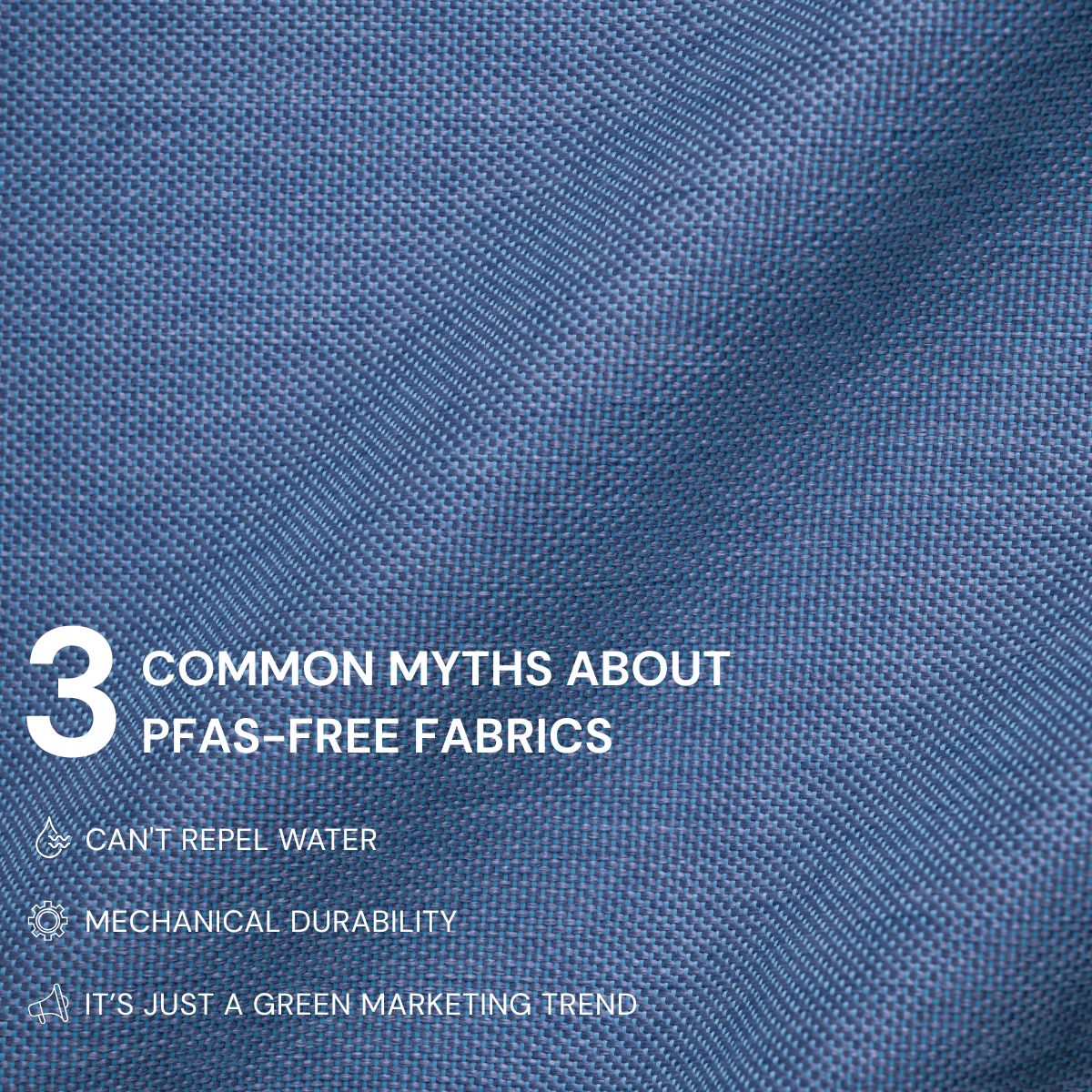
3 Common Myths About PFAS-Free
For Architects and Purchasing Managers, the biggest hesitation when updating material specifications is the fear of trading off performance. At the negotiating table, skepticism toward new technologies often builds massive roadblocks.
Let’s use hard technical facts to shatter the three most common myths about PFAS-Free fabrics:
The Loss of Water Repellency
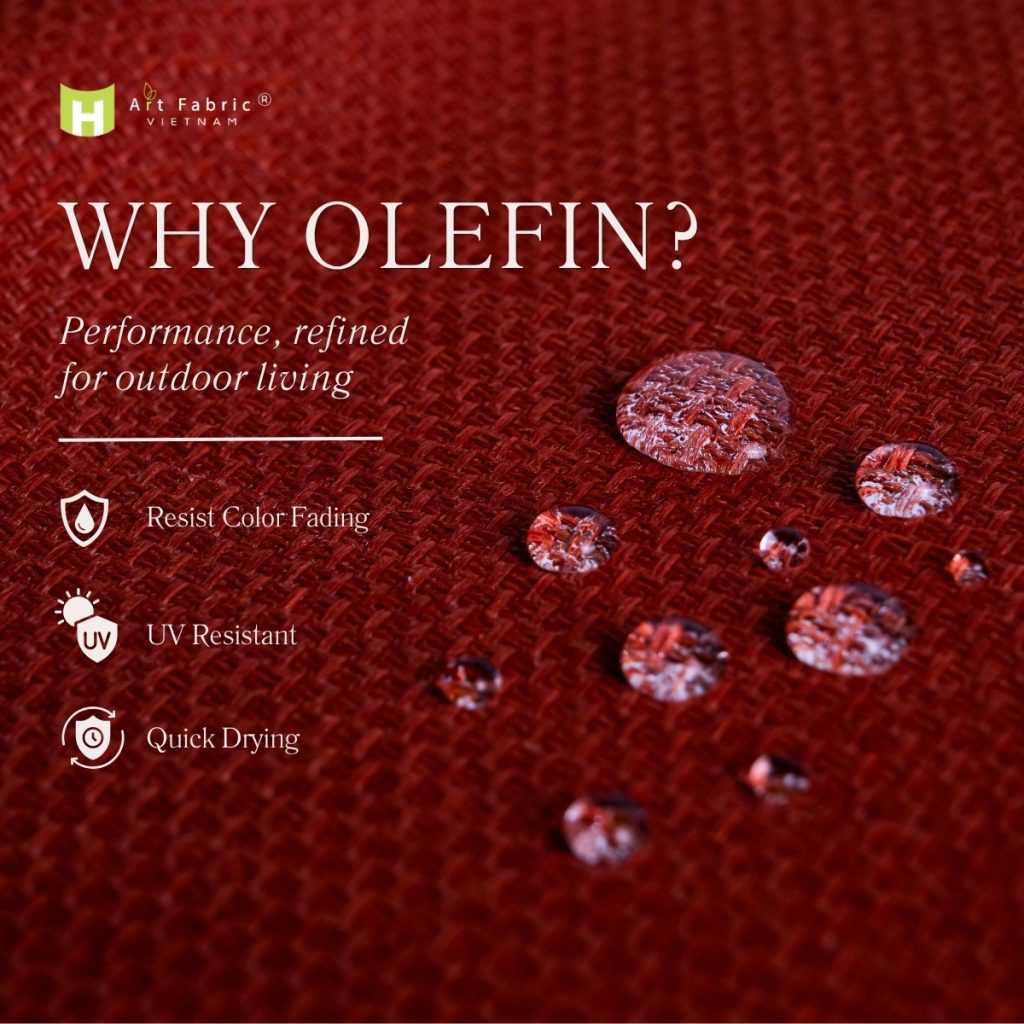
Superior waterproofing is not a monopoly held by PFAS. Modern PFAS-Free alternatives utilize the cutting-edge C0 Finish (Fluorine-Free) technology. Instead of relying on toxic chemicals, C0 formulations synthesize plant-based compounds, polyurethane, or silicone to flawlessly replicate nature’s “Lotus Effect.” The result is that water continues to bead up into perfect spheres and roll right off the surface.
Compromised Mechanical Durability
This myth stems from a fundamental confusion between a fabric’s surface coating and its yarn structure. PFAS is merely a chemical membrane applied to the outside. In contrast, mechanical metrics like tensile tear strength or abrasion resistance (Martindale score) depend entirely on the foundational woven yarn (such as high-performance Olefin or Polyester). Upgrading the surface coating absolutely does not weaken the rugged, heavy-duty durability of the core fabric.
PFAS-Free Is Just a Marketing Label
If you assume “PFAS-Free” is just a trendy green label to justify higher prices, your project is exposed to massive legal risks. With the aggressive tightening of the EU’s REACH regulations, sweeping commercial bans across North America, and the OEKO-TEX Standard 100 officially prohibiting PFAS, sourcing PFAS-Free materials is no longer a PR move. It is now a strict, mandatory legal standard for project compliance and final handover.
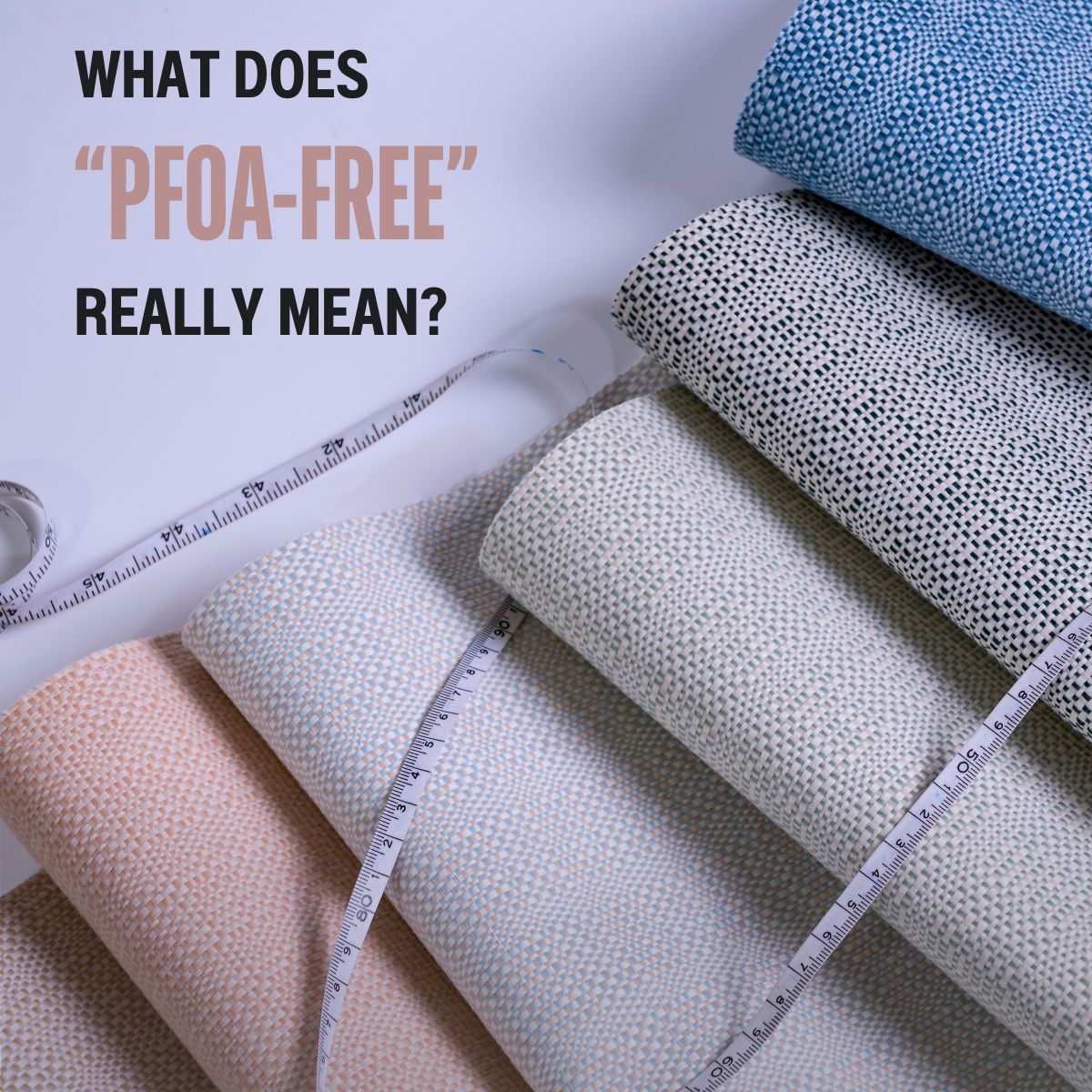
Is “PFAS-Free” the Same as “PFOA-Free”?
At the FF&E negotiating table, Purchasing Managers and Architects hear this confident pitch all the time. But if you sign that procurement contract based on this label alone, your luxury resort project might be sitting on a legal ticking time bomb.
The hard truth that many suppliers don’t want you to know: PFOA-Free and PFAS-Free are absolutely NOT the same thing.
To protect your project from massive compliance risks, procurement teams must see through this chemical wordplay:
The Chemistry Behind the Labels
To understand why these two claims are fundamentally different, we need to look beyond the marketing language and examine what they actually mean.
PFAS (Per- and polyfluoroalkyl substances): This is the umbrella term for an entire family of over 10,000 different “forever chemicals.”
PFOA (Perfluorooctanoic acid): This is simply one specific, older-generation member belonging to that massive 10,000-member family.
PFOA-Free
When global scientists proved PFOA was highly toxic and regulatory bodies swiftly banned it, what did some textile mills do?
To bypass the law while maintaining waterproofing performance, they simply replaced PFOA with its next-generation chemical “cousins” (like GenX or C6 technology). Since these replacements aren’t legally named PFOA, suppliers boldly slap a “PFOA-Free” badge on their catalogs.
The disaster? That fabric is still loaded with thousands of other toxic PFAS chemicals carrying the exact same health and compliance risks. This is the textbook definition of “Greenwashing”—creating a false sense of safety to bypass the scrutiny of the Purchasing department.
PFAS-Free
An outdoor fabric only truly protects your project’s reputation when it is certified PFAS-Free (or Fluorine-Free). This standard is a definitive guarantee: the manufacturer has wiped clean 100% of the entire forever chemical family from their dyeing and coating processes (No PFOA, no PFOS, no GenX, no C6).
How does the fabric stay waterproof without toxic Fluorine? The answer is C0 Finish Technology. Completely bypassing toxic fluorocarbons, C0 technology utilizes biomimetic compounds (such as plant-based formulas, polyurethane, or silicone) to create high surface tension. Water still beads up and rolls off in a perfect “lotus effect,” but without leaving any ecological footprint behind.
The Ultimate PFAS-Free Upholstery Solution
The regulatory clock is ticking, and the bans wait for no one. However, meeting the world’s most rigorous green standards doesn’t mean you have to compromise on your project’s mechanical durability or aesthetic vision.
At Art Fabric Viet Nam, we have successfully completed our supply chain transition. We are proud to supply premium recycled Polyester and Olefin yarns that completely eliminate all Fluorine-based chemicals. Powered by cutting-edge finishing technology, our commercial-grade fabrics deliver uncompromising water repellency and superior abrasion resistance while ensuring 100% compliance with EU REACH regulations and OEKO-TEX Standard 100.
Don’t let hidden material risks erode your project’s margin and reputation. Connect with the expert team at Art Fabric Viet Nam today to upgrade your material specs and request an international-standard PFAS-Free Fabric Sample Kit tailored for your FF&E project.