In an era characterized by digital perfection, mass production, and a relentless drive for the “new,” our homes have become the ultimate battleground for authenticity. We often find ourselves trapped in a cycle of replacing furniture that looks dated after a single season or striving for a sterile, catalog-ready look that feels devoid of soul. However, a profound shift is occurring in the world of high-end design. Homeowners and architects are looking eastward to an ancient Japanese philosophy to redefine the modern garden: Wabi-Sabi.
This aesthetic, which finds profound beauty in imperfection, transience, and the natural cycle of growth and decay, is the perfect antidote to the rigidity of contemporary architecture. When applied to Outdoor Living, Wabi-Sabi creates a sanctuary that feels grounded, intimate, and deeply connected to the earth. It is a celebration of the “real” over the “perfect.”
At Art Fabric Vietnam, we understand that creating a Wabi-Sabi-inspired space requires a delicate balance. It is about choosing materials that look like they belong to nature—raw, tactile, and unadorned—while ensuring they possess the high-performance engineering necessary to survive the elements.
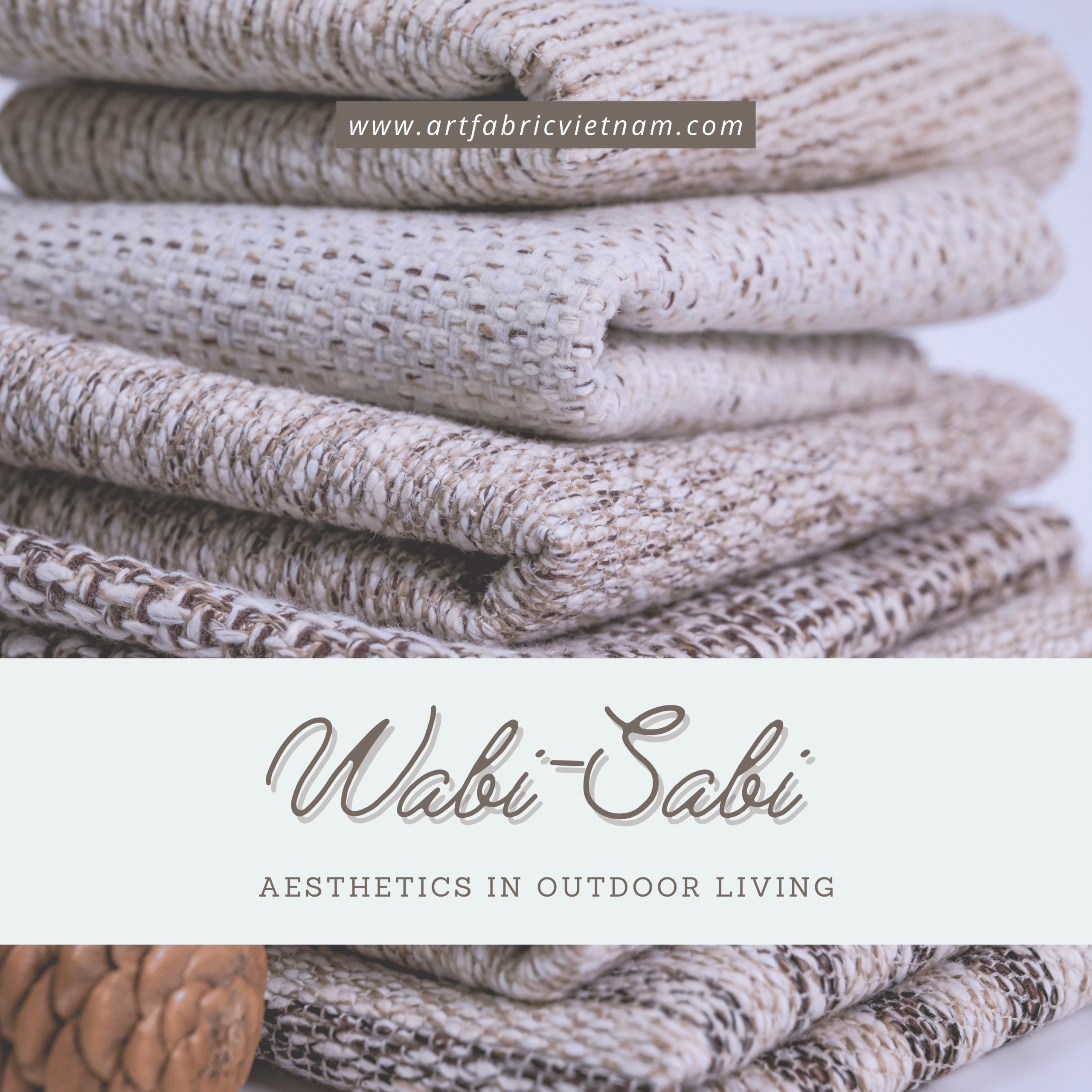
Embracing Wabi-Sabi Aesthetics: The New Trend in Luxury Outdoor Living
In 2026, the most refined outdoor spaces are no longer defined by perfection. Instead, a quiet revolution is taking place — one that celebrates imperfection, time, and the natural beauty of materials. This movement is called Wabi-Sabi.
-
Wabi captures the understated elegance of rustic simplicity, the quietude of the natural world, and the art of finding richness in the unadorned.
-
Sabi celebrates the poetic beauty of time. It is the graceful aging of materials—the rich, oxidized patina that develops on a copper vessel, the elegant silvering of a sun-kissed teak deck, or the velvet moss delicately weaving through the crevices of a stone pathway.
In a design context, this means moving away from high-gloss finishes and perfectly symmetrical layouts. Instead, we look for organic shapes, weathered textures, and a sense of “Ma”—the Japanese concept of negative space that allows a design to breathe.
The Materials of Time: Wood, Stone, and Metal
In a Wabi-Sabi Outdoor Living environment, materials are chosen based on how they will age. Unlike “fast furniture” made of plastic or cheap laminates that break and look unsightly, Wabi-Sabi materials become more beautiful as they interact with the sun, wind, and rain.
Weathered Wood
Teak and Ipe are classic choices for this aesthetic. Over time, the natural oils in the wood interact with the air, turning the warm brown hues into a sophisticated, silvery-grey patina. This transformation isn’t a sign of decay; it is a badge of honor that tells the story of the seasons.
Honed Stone and Raw Concrete
Avoid polished marble or perfectly uniform tiles. Instead, opt for flagstone, slate, or raw, cast concrete. These materials have natural variations in color and texture that mimic the ruggedness of a mountain cliff or a riverbed.
Living Metals
Copper and bronze are excellent for outdoor accents. As they oxidize, they develop a rich green or deep brown finish that grounds the furniture in the landscape, making the human-made elements feel like part of the natural flora.
The Palette of the Earth
In a Wabi-Sabi-inspired exterior sanctuary, the color narrative is never loud, aggressive, or jarring. Instead, it embraces a symphony of “broken” or muted tones—nuanced shades that feel as though they were organically foraged from a quiet forest floor, a sun-baked desert, or a storm-swept coastline.
The foundation of this aesthetic relies on cultivating sophisticated “Power Neutrals”:
-
Charcoal and Slate: Capturing the profound depth, gravity, and permanence of natural stone.
-
Ochre and Terracotta: Evoking the grounding, sun-drenched warmth of ancient clay and rich soil.
-
Sage and Olive: Blending seamlessly with the surrounding botanical landscape, effectively blurring the boundaries between the built environment and the untamed garden.
-
Sand and Bone: Introducing a soft, diffused luminosity that illuminates the patio without the stark, clinical harshness of pure white.
By curating a deliberately muted and monochromatic palette, the visual focus elegantly shifts. The absence of overwhelming color allows the raw textures, architectural forms, and the exquisite craftsmanship of the outdoor fabrics and furniture to step directly into the spotlight. Ultimately, these earthy tones cultivate an atmosphere of deep, restorative calm.
High-Performance Textiles
The greatest challenge of Wabi-Sabi design is the textiles. The aesthetic calls for fabrics that look like raw silk, hand-loomed linen, or heavyweight cotton. However, natural fibers in their raw state are highly susceptible to UV rot, mold, and fading when left outdoors.
This is where technical innovation meets ancient philosophy. At Art Fabric Vietnam, we specialize in creating textiles that possess the rustic, “honest” texture of natural fibers but are built from advanced polymers like Olefin and specialized Polyester. To achieve this balance of organic aesthetics and modern resilience, you can explore our collection of Olefin and specialized Recycled Polyester fabrics, alongside our gallery of diverse outdoor design inspirations to see how performance can meet raw, natural beauty.
By using solution-dyed yarns, we ensure that the deep, earthy tones of your Wabi-Sabi retreat remain vibrant and true, even as they face the harsh reality of the outdoors.
The Beauty of Negative Space
One of the most common mistakes in Outdoor Living design is over-cluttering. Wabi-Sabi teaches us that what we leave out is just as important as what we put in.
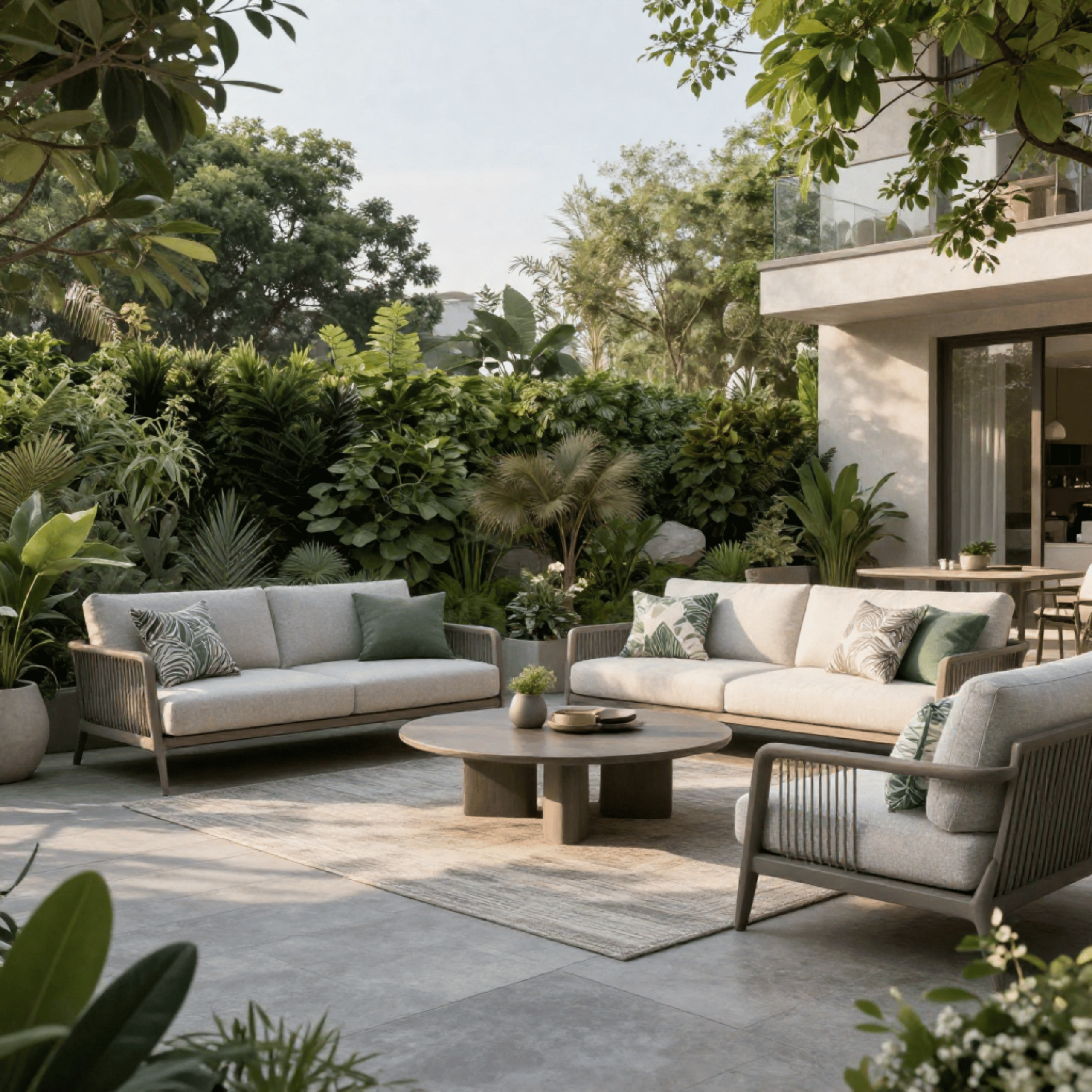
Instead of a massive sectional that takes up the entire deck, consider a few well-placed, asymmetrical chairs. Allow the grass to grow slightly between your paving stones. Leave a corner of the patio empty to let the shadows play across the floor as the sun moves. This “emptiness” creates a sense of peace and allows the individual beauty of each piece of furniture—and each plant—to be fully appreciated.
Minimalism and Intention
Every object in your Outdoor Living area should have a purpose or a story. Wabi-Sabi is not about minimalism for the sake of being “cold”; it is about minimalism for the sake of intimacy.
A hand-carved wooden stool, a ceramic bowl used as a birdbath, or a single weathered lantern are more impactful than a dozen mass-produced accessories. These items invite the user to slow down, to touch the surfaces, and to notice the small details—the grain of the wood, the irregularity of the glaze, the weight of the stone.
Sustainability and the Circular Economy
Wabi-Sabi is inherently sustainable. By valuing the old and the imperfect, we move away from the “disposable” culture of modern consumption. When we choose a high-quality fabric or a solid wood table that is designed to last for twenty years, we are making an ecological choice.
Furthermore, the rise of Recycled Polyester (rPET) aligns perfectly with the Wabi-Sabi philosophy. It is a material that has been given a “second life.” It carries a history—formerly a plastic bottle, now a beautiful, soft-touch cushion—embodying the cycle of transformation that is central to Japanese thought.
Practical Maintenance for the “Imperfection” Look
It is a common misconception that Wabi-Sabi means neglect. In reality, a Wabi-Sabi Outdoor Living space requires a very specific type of care. It is about “tended” imperfection.
- Fabric Care: While we want the space to feel raw, we do not want it to be dirty. Regular dusting of your high-performance fabrics prevents organic matter from building up. If a spill occurs, blot it away so that the “stain” doesn’t become a permanent (and unwanted) part of the history.
- Surface Cleaning: Allow your wood to turn silver, but ensure it is clean of mold. A gentle wash with mild soap once a year will preserve the structural integrity while allowing the color to evolve.
- Curated Growth: If moss grows on your stone, let it stay—but trim the weeds that might make the space feel abandoned rather than peaceful.
A Space that Breathes
Embracing Wabi-Sabi in your Outdoor Living area is a journey toward emotional comfort. It is about creating a space that doesn’t demand perfection from you or your guests. It is a place where a spilled glass of water isn’t a disaster, where a weathered chair is a sign of a life well-lived, and where the passage of time is seen as a beautiful addition to the design.
At Art Fabric Vietnam, we are proud to provide the textiles that anchor these soulful environments. Our fabrics offer the tactile warmth and visual honesty required for a Wabi-Sabi aesthetic, backed by the industrial strength needed to ensure your sanctuary remains a place of rest for years to come. Let the world be fast and perfect; let your garden be slow, beautiful, and real.
Is your outdoor space ready for a soulful transformation?
Would you like me to help you select a fabric texture that mimics raw linen for your Wabi-Sabi project, or should I explain how our solution-dyed yarns prevent the “wrong” kind of fading in high-sun areas?